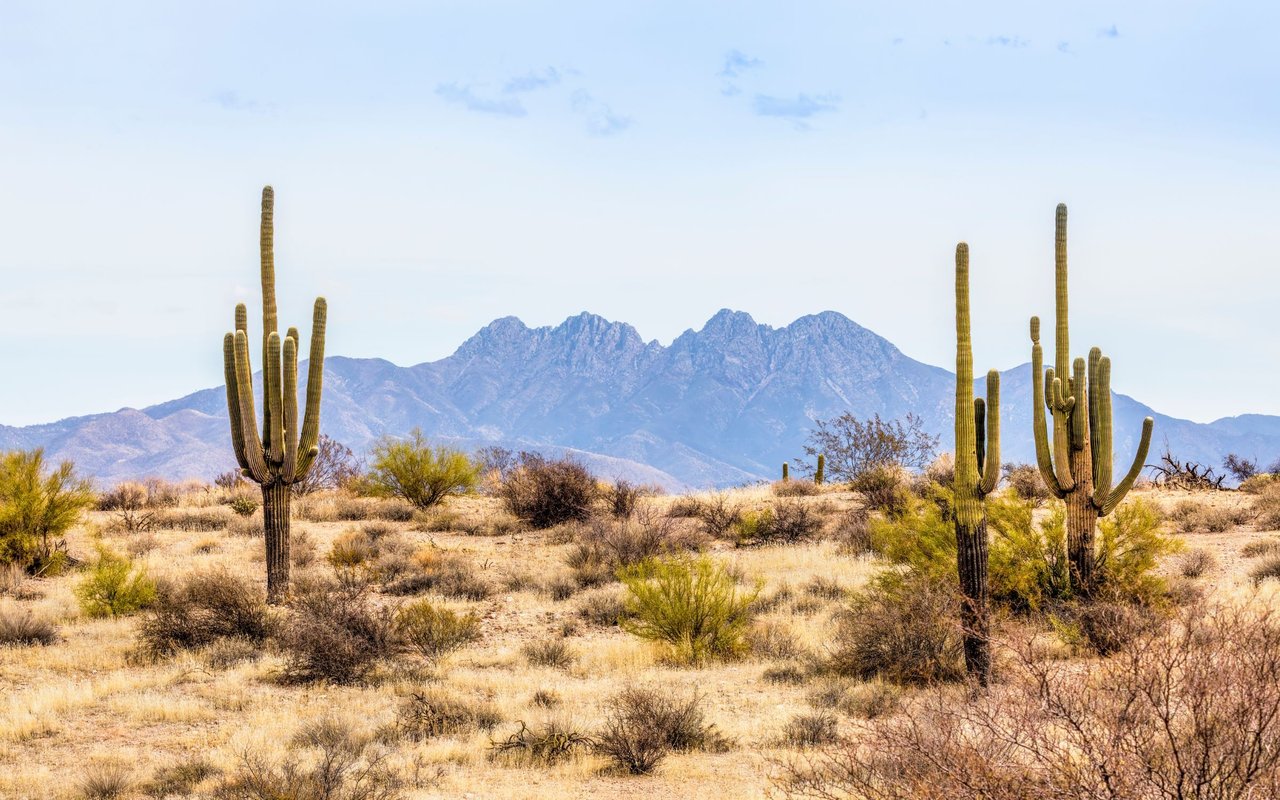
Cal City covers 203 square miles of high desert. Most of it is empty. What fills it up, and when, follows a calendar that outsiders never crack but that shapes how you plan a Saturday if you live here.
The rhythm that runs this town
Everyone new to California City assumes the desert is the same twelve months a year. It isn't. Three forces set the tempo: tortoise season at the preserve, summer heat at Borax Bill, and one five-day festival at the end of September that quietly locks up every hotel room within thirty miles.
Learn the calendar and the town gets bigger. Ignore it and you'll try to hike the preserve in July, or invite your in-laws to visit the first weekend of October.
Here is the shape of the year, as a local would draw it:
| Window | What's active | What to skip |
|---|---|---|
| Mid-March to mid-June | Desert Tortoise Research Natural Area, wildflowers, ride mornings | Midday OHV in late May |
| Late June to early September | Early-morning trail rides only, Central Park lake, indoor plans | The preserve, unshaded hikes |
| Late September to early October | Wasteland Weekend spillover | Booking last-minute lodging for guests |
| Mid-October to March | Peak OHV camping at Borax Bill, cool-weather boondocking | Expecting to see a tortoise |
The rest of this post is how to use that table.
Borax Bill Park, and why locals check the office hours
The center of gravity for anything with wheels is Borax Bill Park & Station at 16363 Twenty Mule Team Parkway. It's the city-run hub for the roughly 4,500 acres of open riding that made Cal City an OHV destination as far back as the 1960s, and the reason the city stood up its OHV permit program back in 2008. The Cal City OHV Department runs the trail maintenance, the D.I.R.T. first-aid building, the RV water fill, and the dump station out of this one address.
A few things residents figure out only after their first season here:
- Camping at Borax Bill is first-come, first-served, with dry camping free and electric hookup sites at a small daily rate. There are only six hookup sites, and on a cool weekend they fill by mid-afternoon.
- The RV water and dump stations run on a $5 daily use pass, or a $30 seasonal pass per RV. The city restricts use to recreational vehicles and prohibits filling containers, so this is not a workaround for a residential water outage.
- The Visitor Center and station office keep limited hours, generally Friday through Sunday, though the showers and bathrooms stay accessible around the clock during that window.
If you're a new resident with an out-of-town friend who wants to ride, the honest thing to tell them is to arrive Thursday. Showing up Sunday afternoon means an empty office and no permits until the following weekend.
There's also a public input meeting for the OHV grant cycle scheduled for February 27, 2026, from 9 to 11 a.m. at Borax Bill Park, with the state's public comment window running from March 3 to May 4, 2026. If you have opinions about which routes get maintained, that is the room to be in.
The tortoises have a season, and it's shorter than you think
The Desert Tortoise Research Natural Area sits northeast of town on Randsburg-Mojave Road, a 39.5-square-mile preserve that protects one of the densest wild populations of Gopherus agassizii left in the Mojave. The dirt-road approach past Borax Bill discourages casual traffic, which is part of why it works.
The rhythm here is narrow. Tortoises emerge from their burrows to forage in spring, then retreat underground once summer heat sets in. Practically, that means mid-March to mid-June is your window, and a Desert Tortoise Preserve Committee naturalist is stationed at the interpretive center through early June to point you toward the burrows that have shown recent activity. The gates run roughly 8 a.m. to 5 p.m.
How to actually see one
- Go early. First light through about 9 a.m. is when tortoises are aboveground and moving.
- Pick the shorter interpretive loops. There are four, each marked with numbered stops. The 0.75-mile Animal Loop is the best primer.
- The dirt road in is passable in a standard car if you take it slow and don't stop in soft sand.
- Bring water for the full time you plan to be out. There are picnic tables and a pit toilet at the trailhead, nothing else.
The naturalist leaves in June for a reason. If you drive out there in July with your cousin who is visiting from Fresno, you will see burrows and lizards and no tortoises, and your cousin will conclude that California City is nothing. This is avoidable.
Central Park is not what it was, and that's fine
Central Park at 10400 Heather Ave is the town's civic backyard, with a fishing lake, sports courts, a senior center, a community center, and a pool that has been working through a facility upgrade. Long-time residents will tell you the park was grander in an earlier chapter of the city's history, and honest online reviews reflect that mixed condition. What it still delivers, reliably, is shade, a lawn, and open water inside city limits — three things that are rare enough here to matter on a July afternoon when the trails are too hot to walk.
For a stopover meal near either end of a Saturday, Momentum Real Estate Group neighbors tend to point people toward Mr. Tomato in the shopping center at 8130 California City Blvd, where weekend barbecues are often going in the parking lot out front. It's the kind of unglamorous local landmark that will not show up on a national travel guide and is more useful for it.
Two other stops that fit the "already live here, need something new" test:
- The Twenty Mule Team Museum in nearby Boron, worth a slow morning if you've been in town long enough to be curious how the borax hauling routes shaped the road grid you drive every day.
- Skyline Drive, a paved loop on the north edge of town that is a legitimate sunset option once the summer wind dies down.
The one weekend your relatives can't visit
Now the big one. Wasteland Weekend, the post-apocalyptic desert festival in its 16th year, runs September 30 through October 4, 2026 on private land off Rosewood Boulevard, technically Edwards but functionally a twenty-minute drive from your grocery store. It draws thousands of costumed attendees for five days of camping, music, vehicle builds, and immersive theater, and the organizers explicitly recommend the Best Western Inn & Suites and Comfort Inn & Suites Mojave as the nearest hotels for anyone not camping on site.
What that means if you live here:
- Lodging is gone. If you are hosting family in early October, book their rooms in July, not August.
- Borax Bill fills up. The event's own FAQ points RV attendees to Borax Bill for showers and services, and the station typically runs Friday through Sunday 8 a.m. to 5 p.m. during the festival with restrooms open 24 hours.
- Traffic on California City Boulevard and Twenty Mule Team Parkway thickens Wednesday afternoon and clears by Sunday evening. Grocery runs at Wednesday lunch or Sunday morning are the easy windows.
- Local businesses see a real bump. If Mr. Tomato has a line out the door on a Thursday afternoon in late September, that's why.
Whether the festival is your scene or not, this is the single week of the year when Cal City behaves like a bigger city. Then it goes back to being what it is: a very large piece of desert with a small town in the middle of it, and a rhythm you now know how to read.
When you're ready to think about the house, not the calendar
Understanding how a place actually works day to day is the same skill that matters when it's time to price a home, plan a move within the Antelope Valley, or add a rental in town. If you're weighing a sale, a purchase, or a small-portfolio play in Cal City, our team is happy to talk through what your specific street and season mean for your options.
Get Your Free Home Valuation and start with a real number for your address before you make any next move.