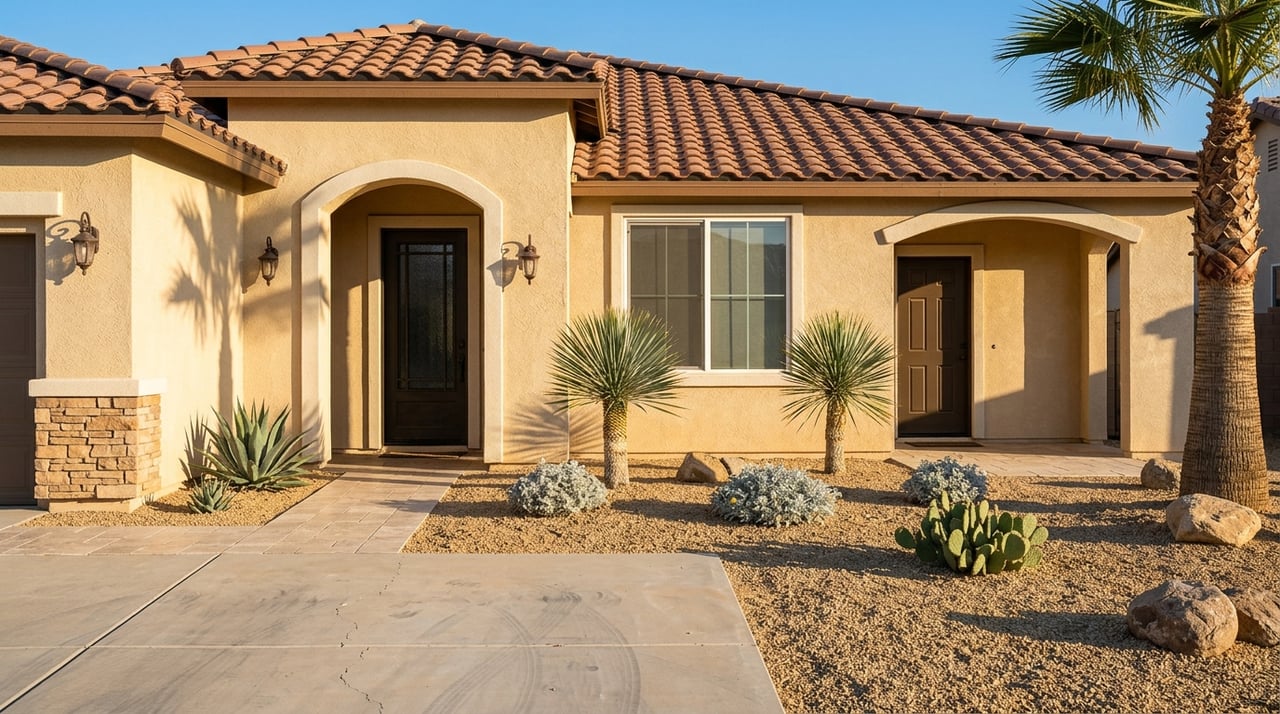
Trying to lower your housing cost while building long-term equity? In California City, house hacking can be a realistic path, especially if you go in with a clear plan and realistic expectations. The city’s price point, detached-home housing stock, and evolving rules around ADUs and small homes create some interesting options for buyers who want their home to help pay for itself. Let’s break down what house hacking can look like here and what you should verify before you buy.
What house hacking means in California City
House hacking usually means buying a home you live in and using part of it to generate rental income. That could mean renting out a spare bedroom, buying a small multi-unit property and living in one unit, or adding an ADU or JADU to a property you own.
In California City, that idea gets attention for a simple reason: the local numbers suggest it may be worth exploring. Census Reporter estimates a median owner-occupied home value of $278,000, while Realtor.com shows a median listing price around $300,000 and median rent around $1,890. That rough rent-to-price relationship suggests potential, but it does not guarantee positive cash flow after taxes, insurance, maintenance, vacancy, and financing.
Why California City stands out
California City is a large, low-density desert city with 203.6 square miles and about 70.8 people per square mile. It has roughly 5,271 housing units, and the current market snapshot shows more than 1,000 active listings with median days on market around 74.
For buyers, that can create room to slow down and compare options. It also means you may find more detached homes than duplexes or fourplexes, which matters because the most practical house hacking strategy here is often a single-family home with extra space rather than a classic small multifamily purchase.
The city’s housing element also notes that 129 units were built, under construction, or permitted since June 30, 2023. Most were single-family homes, with just one ADU and one duplex permitted, which reinforces that the local housing mix is still mostly detached homes.
The most realistic house hacking options
Rent out spare bedrooms
For many buyers, this is the simplest starting point. If you buy a single-family home with an extra bedroom or two, renting one or more rooms may help offset your monthly payment without requiring a major construction project.
This path can be appealing because California City’s housing stock leans heavily toward detached homes. You may not need a duplex to start house hacking if the layout of the home works for your budget and comfort level.
Add an ADU
An ADU, or accessory dwelling unit, can be a strong fit if you want a more separate rental setup. California law requires ministerial approval for ADU applications rather than discretionary review or a public hearing, and a jurisdiction must determine whether the application is complete within 15 business days and act within 60 days after receiving a completed application.
State law also limits some local restrictions. There can be no minimum lot size for an ADU, detached ADUs can be up to 1,200 square feet, and side and rear setbacks for new detached ADUs generally cannot exceed four feet. ADUs may be rented separately from the main residence, but they generally cannot be sold separately.
Consider a JADU
A JADU, or junior accessory dwelling unit, is a smaller option that can work well in a single-family home. Under state law, a JADU must be within the walls of an existing or proposed single-family residence, must have a separate entrance, and must include an efficiency kitchen.
A JADU can be a useful strategy if you want to create rental space without building a full detached unit. Keep in mind that JADUs are limited to one per single-family lot, cannot be sold separately from the main residence, and must be rented for terms longer than 30 days.
Explore manufactured or small-home setups
California City’s planning materials show that manufactured housing is part of the local housing mix. The city has also created a Residential Tiny and Small Homes overlay zone, and recent planning discussions show ongoing interest in expanding small-home options.
That does not mean every lot will work for this strategy. It does mean California City has shown openness to nontraditional housing types, which can be helpful if you are looking beyond a standard stick-built setup.
What zoning and planning mean for you
Before you fall in love with a property, check what the parcel actually allows. City planning documents show that single-family dwellings are permitted across all residential zones, while multifamily dwellings are concentrated in RM1 and RM2.
The city’s materials also indicate that ADU rules are being updated to align with California law and to allow ADUs in all residential zones. In addition, the planning department maintains guides for second-unit housing and a tiny home tract map, which shows that smaller-unit housing is already part of the local planning framework.
Still, house hacking is never one-size-fits-all. A property may look promising online, but your actual path depends on parcel-specific zoning, overlay rules, setbacks, utility capacity, and permit requirements.
Financing matters more than many buyers expect
A house hacking plan only works if the financing lines up with the property and the income strategy. HUD states that FHA loans are available on one-to-four-unit properties and can go as low as 3.5% down. On a $300,000 purchase, that is a $10,500 down payment before closing costs.
That lower entry point is one reason house hacking appeals to first-time buyers. If you can buy as an owner-occupant and create a rental stream, you may be able to reduce your out-of-pocket housing cost while building equity over time.
CalHFA also matters for California buyers. Its borrower rules require owner occupancy for CalHFA homebuyer programs, and first-time buyer programs require homebuyer education. That makes it important to separate true owner-occupied house hacking from investor-only plans.
The big underwriting catch: not all rent counts
This is one of the most important details in any California City house hacking plan. CFPB Appendix Q says rental income from a multiple-unit property where you live in one or more units may be used for qualifying purposes, but roommate or boarder income may not be usable if it is not documented on tax returns.
In plain English, a lender may view income from a true second unit differently than income from a spare bedroom. So while room rental can still help your monthly budget after closing, it may not help you qualify for the loan in the same way a formal multi-unit or separate-unit setup might.
That is why two properties with the same price can lead to very different financing outcomes. The property type, unit setup, and documentation of income can all affect what a lender is willing to count.
Questions to ask before you buy
House hacking works best when you ask the practical questions early. In California City, these are the ones worth reviewing before you make an offer:
- What is the parcel’s zoning?
- Is the lot in an overlay district, including the tiny and small homes overlay?
- Can the property support an ADU, JADU, or another small-unit setup?
- Will water and sewer capacity support the planned improvement?
- What permit path applies through planning and building?
- Will your lender count the proposed rental income, and if so, which type?
California City’s building department notes that planning review comes before construction, and the building department handles permits and inspections. The city also points property owners to zoning tools and local guides, which reinforces how important parcel-level research is.
A smart way to evaluate a property
If you are looking at California City for house hacking, try to compare homes through a practical lens instead of just focusing on list price. A cheaper home is not always the better deal if the layout, zoning, or utility setup limits your options.
A strong candidate property often checks several boxes:
- A layout that supports privacy for you and a tenant
- Zoning that fits your intended use
- Space for an ADU or JADU, if that is part of the plan
- A payment that still makes sense even if rent is delayed or lower than expected
- A financing strategy built around income the lender is actually willing to count
That last point matters a lot. The rough rent-to-price relationship in California City may look promising, but a good deal on paper still needs to survive real-world costs and lender rules.
Why local guidance helps
House hacking in California City is not just about finding a property with extra space. It is about matching the property, the permit path, and the financing to your actual goals.
That is where local guidance can save time and money. If you are comparing single-family homes, manufactured-home opportunities, or properties with ADU potential, it helps to work with someone who understands how these pieces fit together in the Antelope Valley and nearby markets.
If you want help evaluating California City properties for house hacking, reach out to Maritza Arellano for clear, local guidance on what may fit your budget, timeline, and long-term goals.
FAQs
Can you house hack in California City with just a spare room?
- Yes, you can rent out spare rooms in a single-family home, but lender rules may treat roommate income differently from rent tied to a formal second unit or multiple-unit property.
Can you build an ADU in California City?
- California City’s planning materials indicate the code is being updated to align with state ADU law, and state law allows ADUs in residential settings subject to parcel-specific review, permits, and site conditions.
Can a JADU work for house hacking in California City?
- Yes, a JADU can be a practical option in a single-family home if the property layout works, but it must meet state rules for location within the home, separate entrance, kitchen, and rental term.
Will a lender count rental income from a roommate in California City?
- Not always. CFPB Appendix Q says roommate or boarder income may not be usable for qualifying if it is not documented on tax returns, while rent from a multiple-unit property may be treated differently.
Are duplexes and multifamily properties common in California City?
- The city’s recent housing data suggests the market is still mostly oriented toward single-family homes, so detached-home house hacking strategies may be easier to find than small multifamily options.
What should you verify before buying a California City house hack property?
- Check the parcel’s zoning, any overlay district, utility capacity, permit path, and how your lender will treat the expected rental income before you move forward.