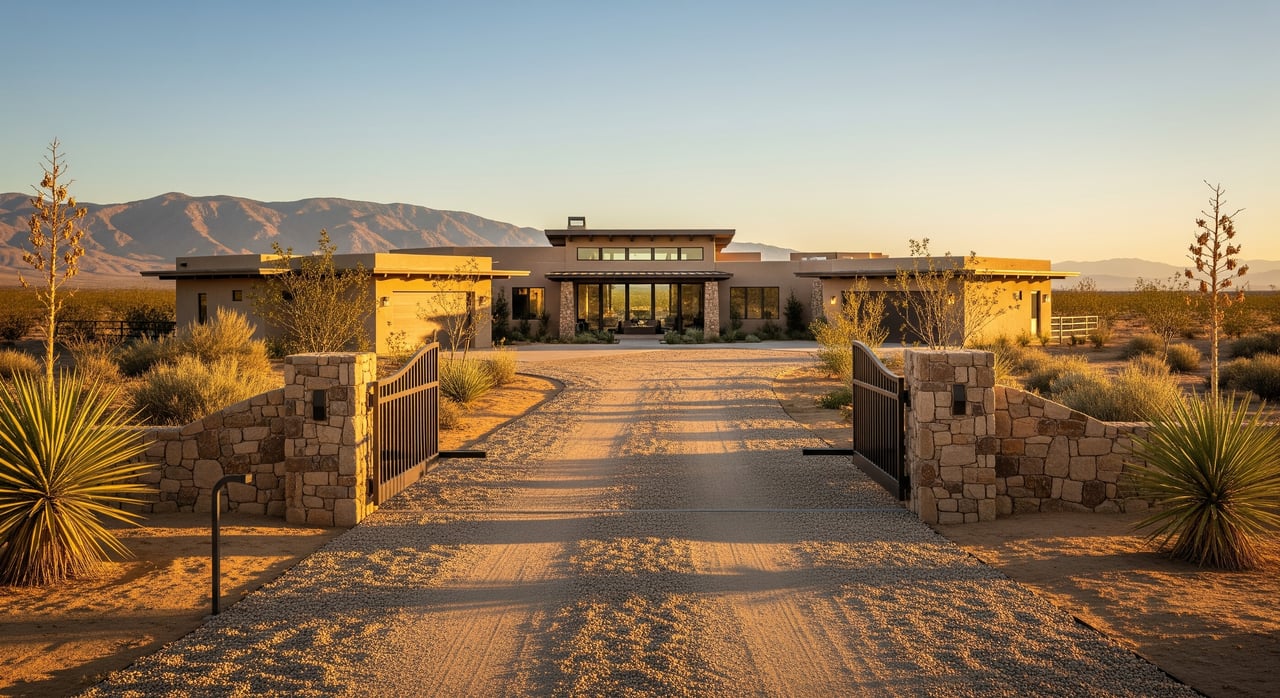
Looking for room to breathe in Pearblossom? Acreage here can deliver the views and privacy you want, but rural land plays by different rules than suburban lots. You will face questions about zoning, legal access, and how to bring in water, septic, and power. This guide shows you what to verify, which county offices to call, and how to protect yourself before you write an offer. Let’s dive in.
Why Pearblossom acreage is different
Pearblossom sits in unincorporated Los Angeles County in the Antelope Valley. That means county rules apply, not city rules. Parcels often serve rural residential, ranch, agricultural, or vacant land uses, and services are more spread out than in neighborhoods closer to Palmdale or Lancaster. You may drive along Pearblossom Highway for regional access, but the last mile to your parcel could be a private or unimproved road.
On acreage, your top priorities usually include legal access, water source, septic feasibility, wildfire risk, and the cost to bring in utilities. Each one affects what you can build, how long it takes, and whether a lender will finance your plan. A little due diligence up front can save months of delays later.
Zoning: what you can build
Zoning in unincorporated Los Angeles County controls how you can use your land. It sets permitted uses, minimum parcel size, setbacks, height limits, and whether you can add accessory buildings or conduct agricultural or commercial activities. Do not assume a rural parcel automatically allows a home plus multiple outbuildings. The exact code matters.
Common checks include whether your intended use is permitted by right or requires a conditional use permit, whether you can add an ADU or second unit, and whether agricultural activities or keeping animals are allowed. Also review minimum lot sizes for any splits and confirm the location of setbacks that shape your buildable area.
How to verify zoning
- Ask the Los Angeles County Department of Regional Planning for the parcel’s exact zoning designation and a zoning verification letter.
- Review the county’s land use and zoning maps along with assessor records for parcel details and any recent code updates.
- Confirm rules for accessory structures, ADUs, barns, and any commercial or agricultural uses you have in mind.
Watch for overlays and easements
Beyond base zoning, county general plan overlays can influence development. Overlays may address resource conservation, scenic corridors, flood hazards, or wildland fire areas. Recorded easements can also affect usable acreage and building placement. Ask your title officer to flag any easements, lot line adjustments, or restrictions such as conservation easements or Williamson Act contracts that limit use.
Access and roads: make sure you can get there
Access is about two things: your legal right to reach the land and a practical way to drive there year round. In rural pockets of Pearblossom, properties without recorded access do exist. That can complicate financing, insurance, and utility service.
Legal vs physical access
- Legal access means a public right-of-way or a recorded easement. A visible dirt track is not enough if it is not recorded.
- Physical access means the route is passable. Seasonal washouts, deep ruts, or locked gates can limit use, inspections, and construction.
Road maintenance and fire access
- Determine whether the road is county maintained or private. Private roads typically rely on owners or a road association for maintenance and repairs.
- Ask the Los Angeles County Fire Department about emergency vehicle access standards. Minimum width, turning radius, vertical clearance, and surfacing can affect permits and construction delivery routes.
What to confirm before you offer
- Get written confirmation of legal access from the seller or title company. Include access verification in escrow contingencies.
- If access is via a private road, obtain the recorded road maintenance agreement.
- Contact Los Angeles County Public Works to confirm the road’s status and whether improvements are planned or required.
Confirm legal, recorded access before you make an offer. Without it, your project and loan can stall.
Utilities: water, septic, power, internet
Rural parcels around Pearblossom often lack full utility service. Plan for water supply, wastewater disposal, power, gas, and connectivity. Each provider or permitting agency will give you written guidance on what is feasible and what it may cost.
Water options and tests
- Existing well: Ask for well logs, pump tests, and recent potable water test results. Review any shared well agreements to confirm rights and cost sharing.
- No existing well: Consult with a licensed well driller and review state and county guidance on drilling and groundwater. Consider a hydrogeologist if the area is known for low yields.
- Public or mutual water: In limited pockets, you may be able to connect to a district or mutual system. Get a written availability or service letter. Connection costs can be high, especially across distance.
Septic feasibility
- Most acreage relies on onsite wastewater systems. Request a soils and percolation test through the Los Angeles County Department of Public Health, Environmental Health Division.
- Verify setbacks from wells, property lines, and drainages. Septic capacity must match your intended bedroom count and home size.
- If the lot’s soils are marginal or testing fails, you may need a redesign or a different parcel.
Electricity and gas
- Contact Southern California Edison for a serviceability or line extension letter. Distance to the nearest line heavily influences cost and timeline.
- For natural gas, confirm whether SoCalGas serves the area. If not, plan for propane with a local provider. Follow county rules for tank placement and safety.
- Off-grid: Some buyers choose solar with battery storage and a generator. Confirm county permitting requirements for alternative energy systems before you buy equipment.
Internet, trash, and mail
- Internet and phone: Fixed-line broadband may be limited. Options can include fixed wireless, satellite, or cellular hotspots. Test cellular reception on site at different times of day.
- Trash and recycling: Some locations require private haulers or self-haul. Verify service options in advance.
- Mail: Rural delivery may use roadside boxes or a PO Box. Confirm with the local post office.
Fire, soils, and environmental checks
Site conditions shape both feasibility and insurance. Pearblossom and the Antelope Valley have areas of wildland fire risk, variable soils, and occasional flood or wash hazards.
Wildfire considerations
- Review fire hazard mapping for your parcel and ask the Los Angeles County Fire Department about water supply needs, access standards, and defensible space requirements.
- Expect building materials and vegetation management requirements to reduce risk. Insurance pricing and availability can be affected by fire hazard severity and access.
Soil, drainage, and flood
- Check general soil data using tools like soil surveys, then order on-site soils and geotechnical reports for building pads and septic design.
- Even dry desert channels can carry storm flows. Review FEMA flood maps and county data to see if the parcel lies in a flood zone or near ephemeral washes.
- If sensitive habitat or riparian areas are present, you may need environmental review or mitigation.
Your due diligence game plan
Approach rural land like a project. Build a clear checklist and give yourself enough time in escrow to confirm the essentials.
Action checklist
- Title and access
- Order a preliminary title report and verify a recorded access easement or public right-of-way.
- Obtain any road maintenance agreement and confirm gate or lock procedures for inspections.
- Zoning and entitlements
- Request a zoning verification letter from Los Angeles County. Confirm permitted uses, ADUs, barns, and any conditional permits.
- Ask about overlays or restrictions that could limit development.
- Utilities and services
- Get written serviceability or extension letters from Southern California Edison and SoCalGas, and from any local or mutual water provider.
- Review well logs and pump tests for existing wells or order a well feasibility consult if none exists.
- Obtain percolation testing and septic feasibility from Environmental Health.
- Site suitability
- Order soils, perc, and a geotechnical report for building pads and septic design.
- Check fire hazard and FEMA flood maps and ask about environmental constraints.
- Permits and compliance
- Confirm required building permits with Los Angeles County Public Works, Building and Safety, and any fire department approvals.
- Verify that any existing structures have permits and meet code.
- Survey and boundaries
- Commission a survey to confirm property lines, locate easements, and set setbacks.
- Shared resources
- For a shared well or private road, obtain a recorded agreement that details cost sharing and maintenance duties.
- Insurance and financing
- Get quotes for wildfire and other needed coverage.
- Confirm lender requirements for legal access, potable water, and septic or sewer.
Suggested contingencies and timing
- Build in time for agency responses and field work. Well and septic testing can take weeks.
- Include contingencies for title and legal access, zoning verification, well and septic feasibility, utilities, survey, and fire or environmental review.
- Line up the right professionals early. Consider a county planner consult, land-use attorney, civil or septic designer, geotechnical engineer, licensed well driller, surveyor, and a contractor experienced with rural sites.
Red flags that deserve caution
- No recorded legal access.
- No proven potable water source, or poor well prospects.
- Failed percolation test or soils unsuitable for septic.
- Shared well without a clear recorded agreement.
- Very long or costly electric line extension.
- High fire hazard area with limited access and no nearby water supply options.
- Unpermitted structures or code violations.
- Private or unimproved road with no maintenance agreement.
- Title exceptions that limit intended use.
Ready to buy with confidence?
Buying acreage in Pearblossom can be a great move if you confirm zoning, nail down access, and understand your utility path from day one. With the right plan and the right partners, you can avoid costly surprises and move from raw land to a buildable homesite with clarity.
If you want a local team that understands Antelope Valley land, we are here to help you evaluate parcels, structure smart contingencies, and keep escrow moving. Connect with Maritza Arellano and the Momentum Real Estate Group to talk through your goals and next steps. Hablamos español.
FAQs
Can I build a house and an ADU on Pearblossom acreage?
- It depends on your parcel’s zoning, setbacks, septic feasibility, and any overlays. Request a zoning verification letter and confirm with the county early.
How do I verify legal access to a rural parcel?
- Review the preliminary title report for recorded easements and ask the county recorder or assessor to confirm. Make access verification an escrow contingency.
What are my water options if there is no meter?
- Most buyers drill a private well or use a shared well with a recorded agreement. In limited areas, a district or mutual system may connect, subject to cost and availability.
Who maintains private roads to the property?
- Maintenance typically falls on owners via a recorded road agreement or a road association. County maintained roads are limited in rural areas.
Will a lender finance land without public water or sewer?
- Many lenders require proof of potable water and septic feasibility. If those are missing, expect stricter terms or specialty rural loan options.